Keurig Dr Pepper earnings beat expectations, but its legacy profit outlook weakens
Earnings results
- EPS beat +4.8%
Actual: $0.66 · Cons.: $0.63 (adjusted diluted EPS)
- Revenue miss -0.2%
Actual: $7.344B · Cons.: $7.36B (reported consolidated revenue)
- Guidance
Maintained 2026 sales of $25.9–$26.4 billion and low-double-digit constant-currency adjusted EPS growth; cut legacy KDP adjusted EPS growth to 3–5% from 4–6%.
Earnings and the stock move
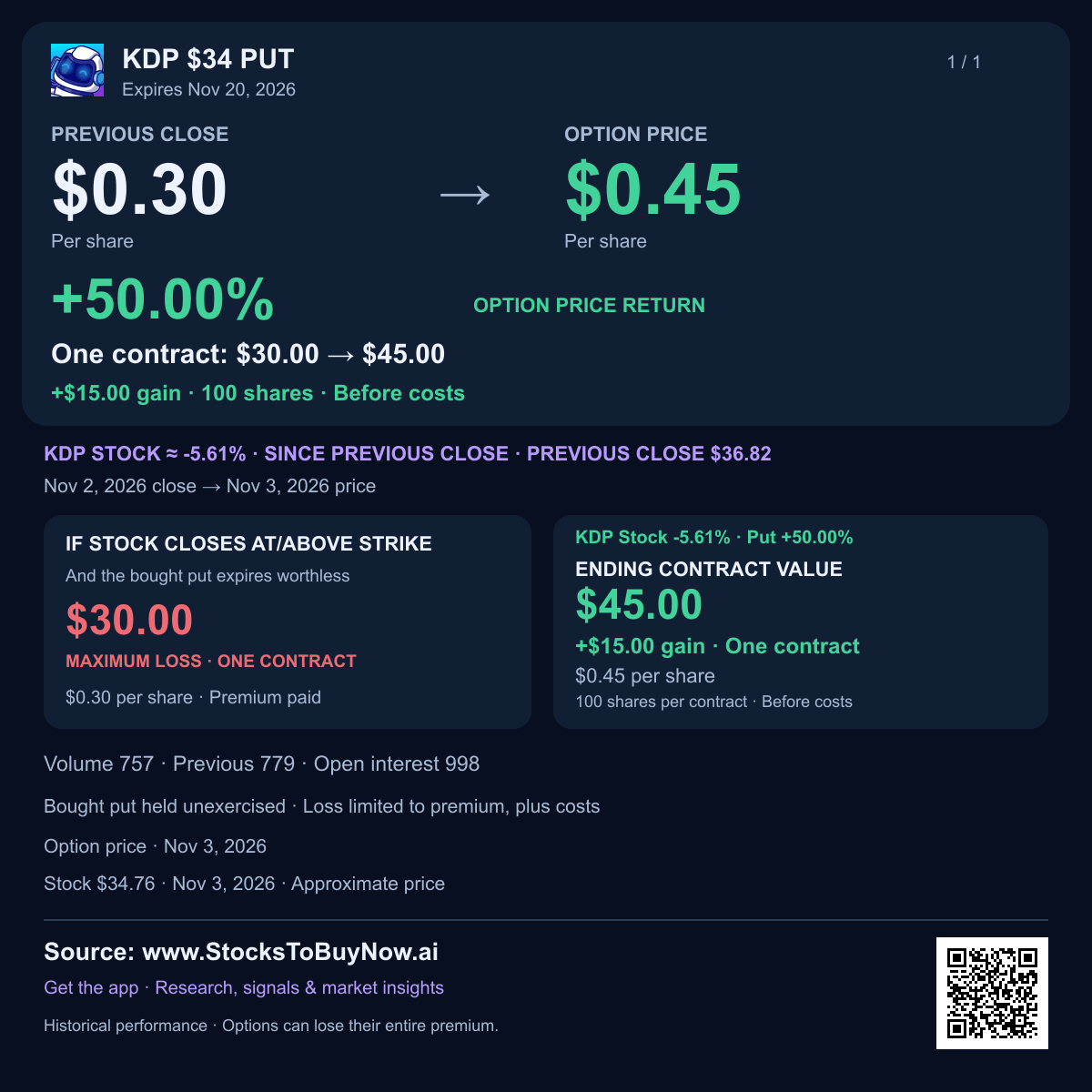
Keurig Dr Pepper released third-quarter earnings before open on November 3. It maintained its overall annual outlook while reducing expected legacy adjusted profit-per-share growth to 3–5%, versus 4–6% in August, because of revised U.S. Coffee expectations. The quarter also benefited from a $99 million tariff refund. These developments shift attention from acquisition-driven sales growth toward the durability of coffee profits. Shares declined in the subsequent regular session; the report does not attribute every sale to a single factor.
Q3 2026 ended September 30 earnings recap
Keurig Dr Pepper lowered its legacy business profit-growth outlook despite an earnings beat. Shares fell 6.0% during trading on November 3, 2026, following the report.
- Adjusted EPS, or profit per share excluding selected items, was $0.66, 4.8% above the $0.63 consensus published a day earlier. GAAP profit per share was $0.59.
- Revenue reached $7.34 billion, just below the $7.36 billion forecast published before results. The JDE Peet’s acquisition drove much of the 70.6% annual sales increase.
- Legacy KDP sales grew 8.6% without the acquired business. U.S. refreshment beverage sales rose 10.9%, showing that growth also came from the existing portfolio.
- Full-year sales guidance stayed at $25.9–$26.4 billion. Legacy adjusted profit-per-share growth is now expected at 3–5%, down from 4–6%, reflecting revised U.S. Coffee expectations.
- A $99 million tariff refund helped both reported and adjusted operating profit. That benefit makes the quarter’s improvement harder to repeat without stronger underlying margins.
- JDE Peet’s added $2.6 billion in quarterly sales after its April acquisition. Integration costs, financing expenses and the planned separation of coffee and beverages remain investor risks.
Watch whether coffee pricing and profitability improve without another tariff refund. Stronger beverage demand helps, but the next test is turning sales growth into lasting cash flow.
Financials and technicals
Charts through Nov 2, 2026. The session move above may reflect later news.
Technical setup and risks
The charts show the completed November 2 session, before earnings. The $36.82 close was above the 20-day average of $33.91 and 50-day average of $32.54. November 3 trading returned toward the prior $34.1–$34.5 low area. Holding there would help stabilization; a close below it would weaken the recent uptrend. Recovery through $35.4–$36.1 would reclaim prior highs. Historical levels are approximate and can fail.
AI-assisted research with source and calculation checks. Prices may be delayed. Technical charts use the stated completed session, which can precede the quoted intraday move. Educational information; investing involves risk.