EARNINGS & CATALYSTS · October 29, 2026
Arista earnings ahead: can AI networking growth protect profit margins?
Meta has confirmed Arista equipment inside its Prometheus AI network. November 3 earnings will test how demand turns into sales and profit as investors weigh faster growth against a demanding valuation.
| Company | Report date | Window | EPS estimate | Revenue estimate |
|---|---|---|---|---|
| Arista Networks, Inc. (ANET) | November 3, 2026Issuer confirmed | After close | 1.08 | 3.33B |
1) When does Arista report, and what is expected?
Arista confirmed on October 6 that it will report results for the quarter ended September 30, 2026, after close on November 3. As of October 29, public analyst forecasts call for about $3.33 billion in revenue and $1.08 in adjusted profit per share. Adjusted, or non-GAAP, profit excludes specified accounting costs. Those forecasts should be compared with the same profit definition in the results. They are expectations for an unreleased quarter.
2) Why does Meta’s network disclosure matter?
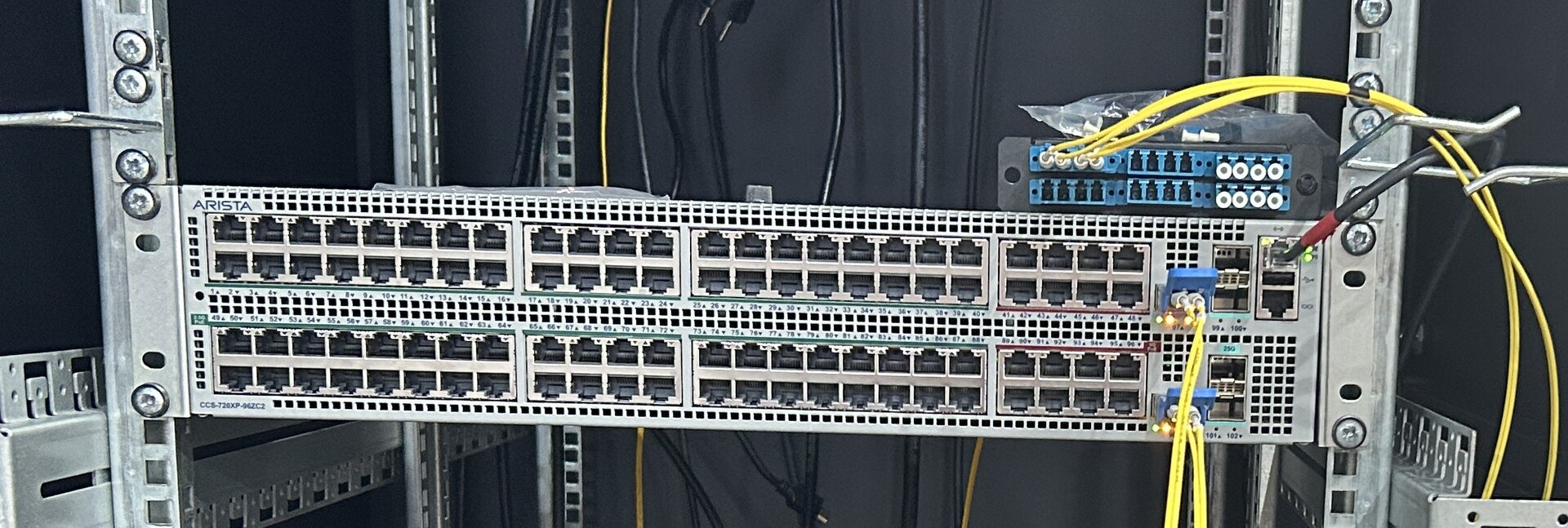
On October 19, Meta described Arista 7800-series equipment in the network connecting buildings within its Prometheus AI cluster. This is a customer-confirmed deployment of the company’s technology in a demanding AI system. Larger AI installations need reliable connections between computers and buildings so expensive processors spend less time waiting for data. That creates a business opportunity for network suppliers. The earnings question is how this demand translates into Arista’s sales, delivery schedules and profitability; the technical disclosure supplies no new order value.
3) Can sales growth preserve strong profitability?
The August outlook called for third-quarter revenue of about $3.3 billion, an adjusted operating margin of 48%–49% and adjusted profit per share of $1.06–$1.08. The operating-margin range was below the 49.9% achieved in the previous quarter. Watch the balance between higher volumes and the costs of components, new products and customer support. Strong sales alone do not establish stronger profit on each dollar of revenue.
4) What is the next product milestone?
Arista’s June 9 product announcement scheduled its air-cooled 1.6-terabit platforms for the fourth quarter of 2026, with liquid-cooled versions planned for the first quarter of 2027. Higher network speeds help move data between AI processors. Those were planned availability windows. Watch delivery progress and customer adoption rather than assuming every announced product is already contributing meaningful revenue. Faster products can expand the opportunity while creating manufacturing and supply demands.
5) What do valuation and the charts imply?
At the October 28 regular close of $186.72, Arista traded at about 59.1 times trailing reported profit per share. This places substantial weight on future growth. A slower outlook or weaker profitability could change the price investors are willing to pay. The close was below the 20-day price average of $194.69 and the 50-day average of $195.56, despite a rebound from recent lows. These averages describe the completed trend before earnings; the results can move the stock beyond recent trading ranges.
6) How the business makes money
Arista sells the switches and routing platforms that move data through cloud, AI and enterprise networks. Its software helps operate and automate those systems, while support contracts generate service revenue. Hardware demand depends on customer spending plans, successful deployments and the timing of delivery and acceptance.
7) What to watch
Watch AI network shipments, the next sales outlook and how much growth reaches operating profit. Meta’s recent deployment disclosure and the planned 1.6-terabit product rollout provide concrete demand and delivery checkpoints. Broader enterprise adoption could reduce reliance on a small group of large buyers over time.
8) Recently reported peers
F5 reported after close on October 27, 2026. Revenue of about $917.4 million and adjusted profit per share of $4.42 exceeded dated forecasts of $884.38 million and $4.24. Its adjusted operating margin nevertheless fell to 33.7% from 37.0% a year earlier. F5 issued fiscal 2027 revenue-growth guidance of 8%–9% and adjusted profit per share of $18.00–$18.30. Its stock fell about 20.4% from the October 27 close to the October 28 close. F5 focuses on application delivery and security, so its product mix differs from Arista’s network switches. The useful comparison is the balance between growth, operating profitability and expectations.
9) Risks into the report
Two end customers accounted for 42% of 2025 revenue, so changes in a few large spending plans can affect results. Component supply, customer acceptance delays, export restrictions and competition from other networking systems can limit growth or margins. A high valuation increases sensitivity to disappointing results or outlooks.